

Precise positioning in the vast universe of knowledge is key to efficient learning and research. The Rehabilitation University Library, as a core academic venue dedicated to cultivating professionals in the rehabilitation field, has paved a clear and intelligent book-finding path for academic exploration by introducing the Weixiaobang Library 3D Navigation System.
I. Project Overview
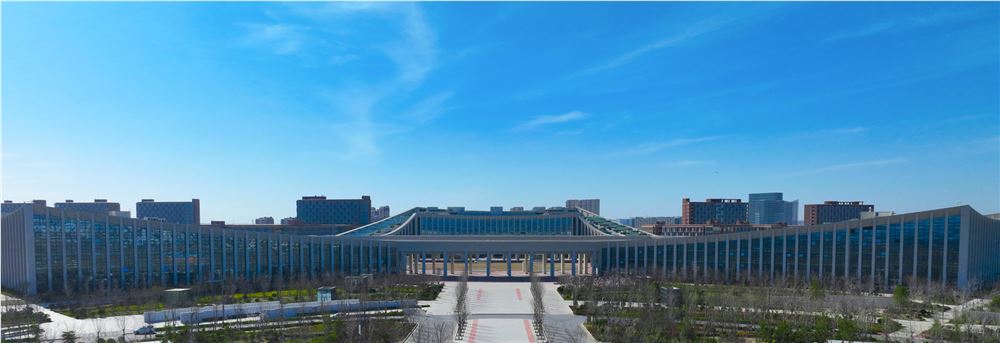
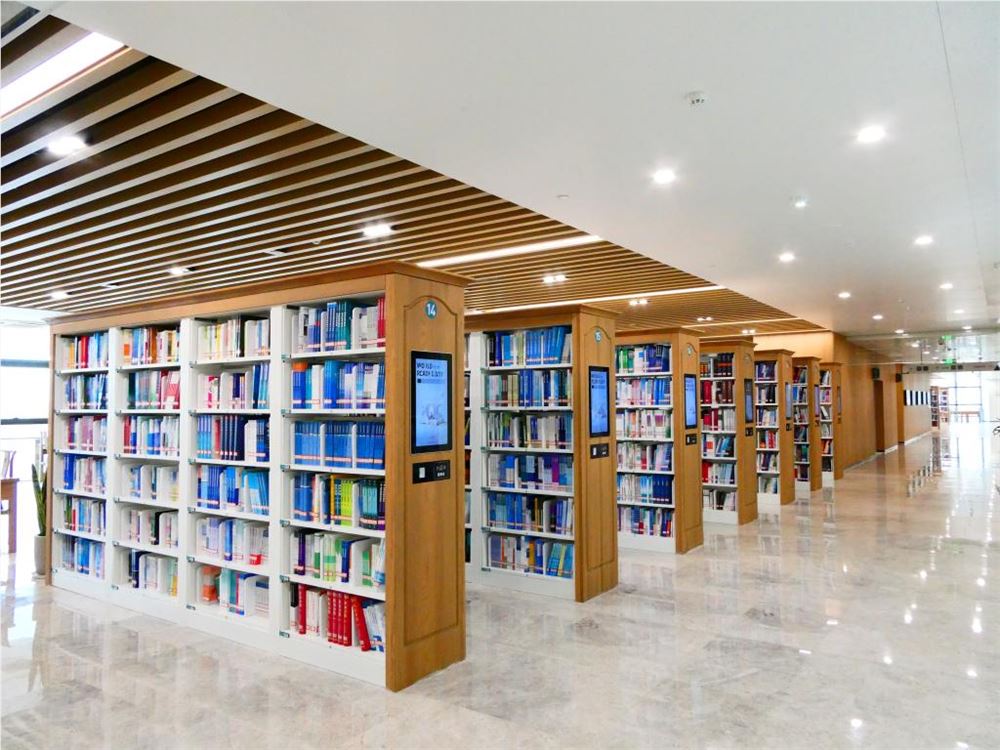
Rehabilitation University is a new type of higher education institution focusing on rehabilitation science and technology, medical health, and other fields, with modern campus planning and beautiful environment. The library is a modern shared complex integrating books and literature, learning and communication, cultural leisure, and exhibition. The building area is about 44,000 square meters, with seven floors above ground and one underground, designed for more than 4,000 seats and a collection of 1.2 million books. The library has complete functional spaces, including electronic reading area, rehabilitation exhibition area, moral education exhibition area, future learning center, café, Cook audio-visual area, video room, seminar room, recording room, etc., adopting an open-shelf borrowing management model to meet the basic functions of collection, reading, circulation, research, leisure, and communication.
II. Project Pain Points
1. Complex floor structure and detailed functional zoning, readers easily lose direction:
The multi-layer structure of the library combined with professional zoning, the arrangement of bookshelves and functional rooms is highly specialized. New students, visitors, and even faculty and students often find it difficult to quickly locate target books or areas, resulting in wasted time and inconvenience.
2.Lack of intuitive spatial perception and resource guidance:
External experts, cooperative scholars, and rehabilitation practitioners find it difficult to quickly grasp the overall structure and resource distribution when visiting, affecting academic exchange and resource utilization efficiency.
3. Inefficient traditional signage system:
Existing signage has limited information and is difficult to update, unable to cope with dynamic adjustments of collection layout and temporary event needs, often leading to incorrect guidance or outdated information.
4. Misplaced books affect search accuracy:
With high circulation, books are easily misplaced. Readers often get confused when the physical book does not match the system record during search by call number.
III. Solutions
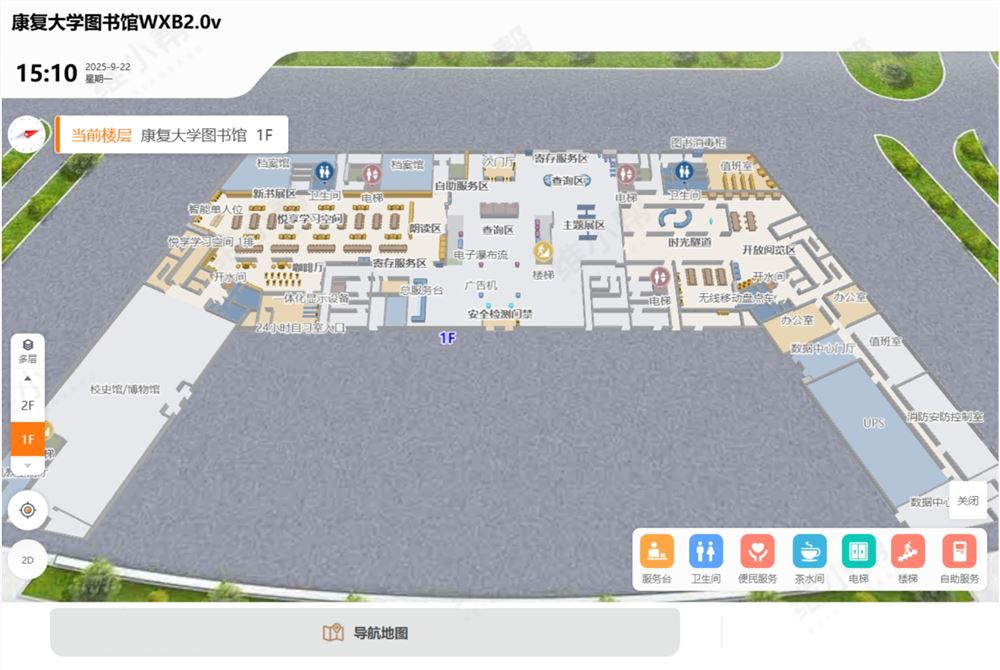
1. Customized outdoor building model and indoor real-scene 3D map
Using high-precision 3D modeling technology, the system truly restores the appearance and internal floor structure of the library, including bookshelf distribution, functional areas, and service facilities on each floor, providing an intuitive and immersive spatial cognition and navigation foundation.
2. Bluetooth positioning navigation and precise route planning
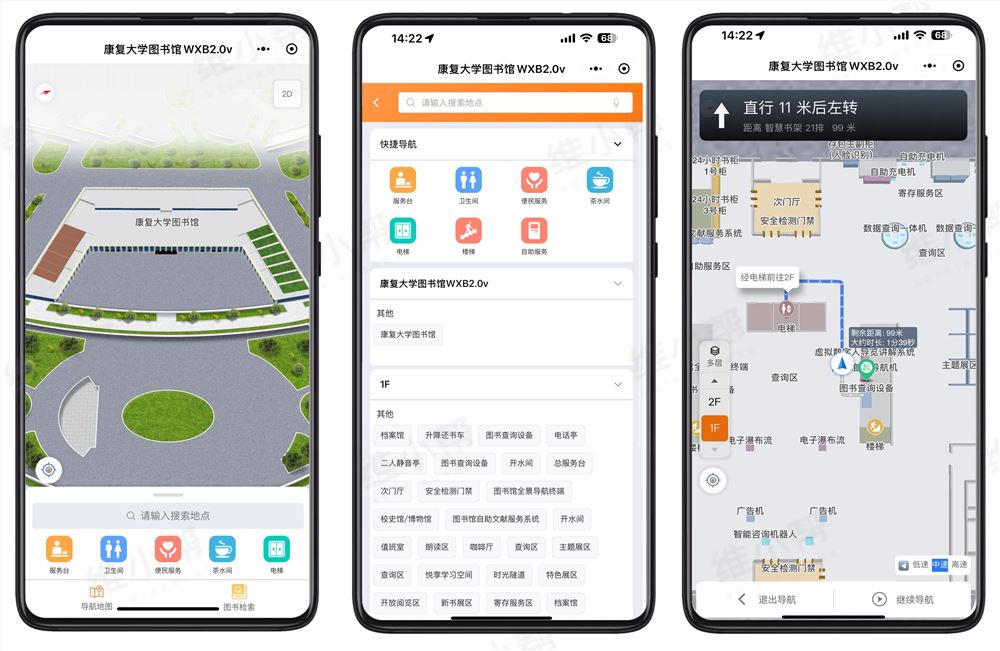
Based on Bluetooth positioning technology, the system realizes real-time indoor positioning and optimal route calculation for readers. Readers can view their location at any time via mobile devices, and the system automatically plans the fastest route to the target bookshelf or functional area.
3. Integration with book search system for unified resource finding
The system seamlessly connects with the library's existing search platform. After querying book information, readers can directly initiate navigation to quickly locate the corresponding book, realizing one-stop service of "search and guide".
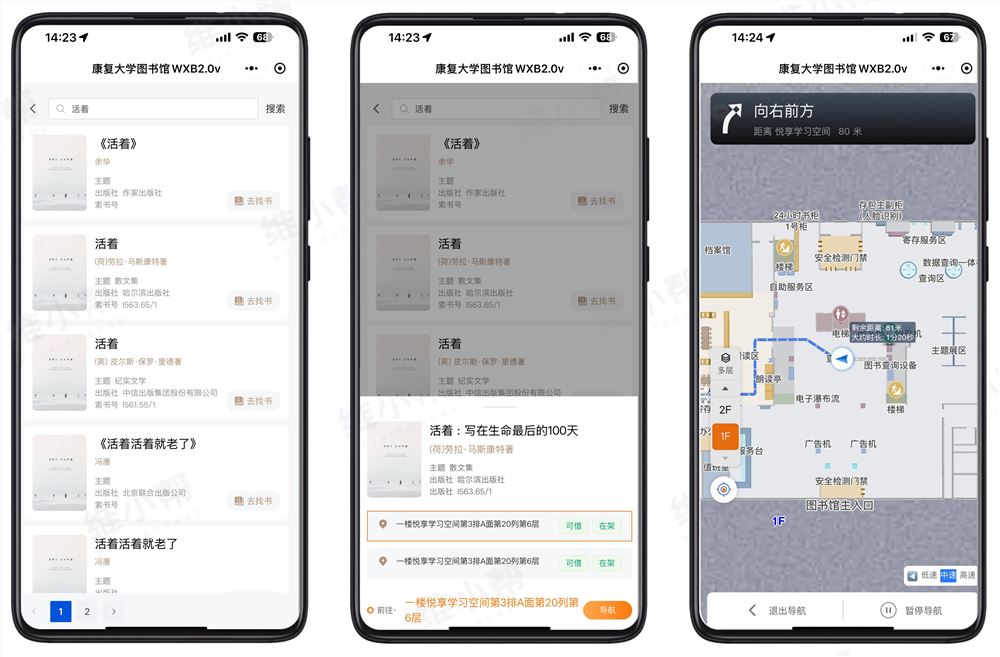
4. Book positioning and shelf-level navigation guidance
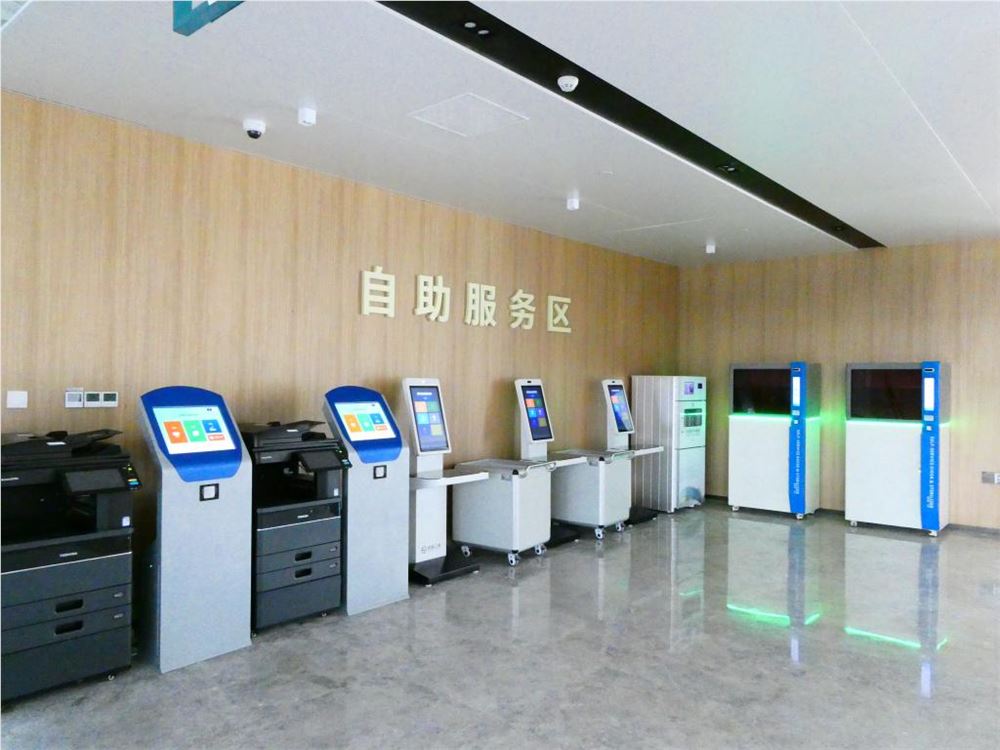
By deploying touch screen navigation devices at key locations in the library, readers can enjoy convenient navigation on mobile devices or directly operate on the large screen to quickly query book locations and obtain intuitive navigation routes.
IV. Application Benefits
1. Significantly improve the efficiency of borrowing and using materials:
With the support of both software and hardware, readers can quickly obtain the optimal route and accurately reach the target book or functional area, saving time and improving resource utilization.
2. Optimize reader experience and spatial perception: Especially for new students, external visitors, and interdisciplinary researchers, the system provides an intuitive and friendly navigation method, lowering the usage threshold and enhancing the library's affinity and professional image.
3. Reduce negative experiences caused by misplaced books:
With real-time positioning and book data linkage, the system can assist librarians in quickly finding misplaced books and guide readers to the correct location, improving service satisfaction.
4. Provide data support for space optimization and service innovation:
Navigation hotspot and route selection data accumulated by the system help analyze reader behavior and provide decision-making basis for collection layout adjustment and service facility optimization.