

1. Project Background
With the rapid development of technology, the traditional funeral industry is also embracing innovation. Beijing Jingyangyuan, a cemetery that integrates tradition and modernity, uses technology to empower and infuse humanistic care into every moment of remembrance, allowing visitors to feel warmth and technological guidance in a solemn environment.
2. Project Overview
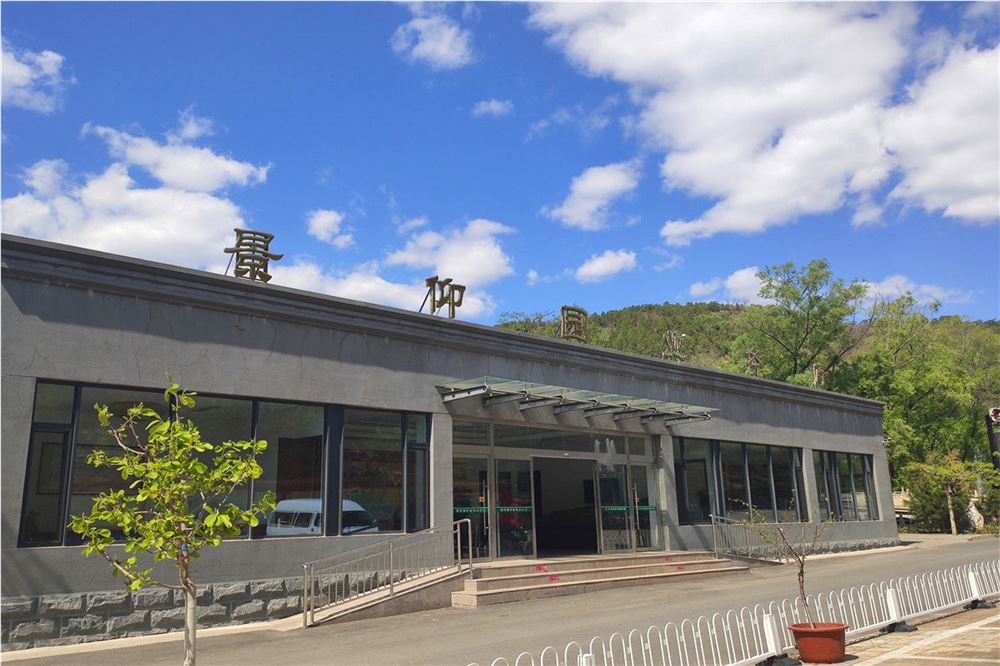
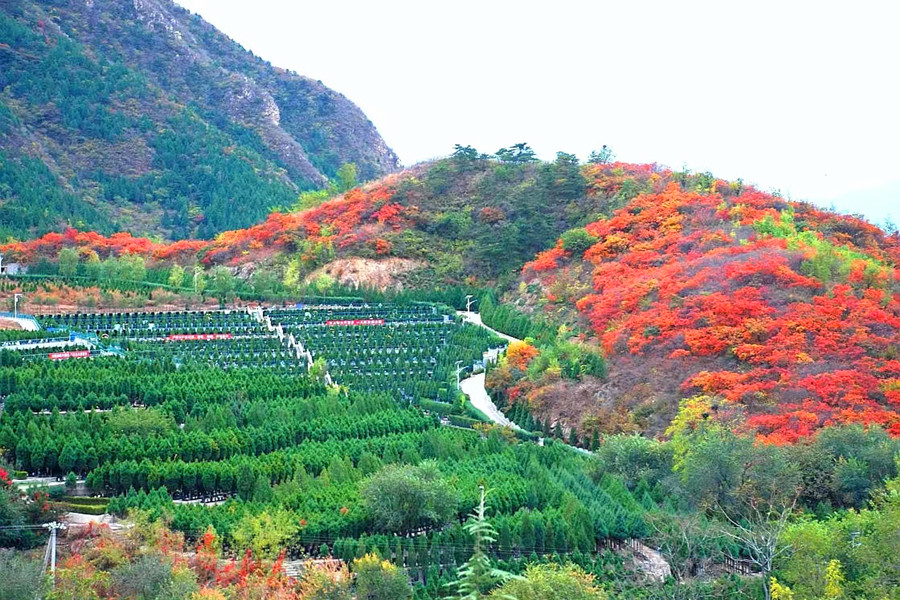
Beijing Jingyangyuan Cemetery is a large, legally operated cemetery approved by the Beijing Civil Affairs Bureau, covering more than 600 mu, located in the Changling Road, Thirteen Tombs area of Changping District. The cemetery has a beautiful environment and well-planned grave areas, including several parks such as Chaocuiyuan and Xiangfoyuan, with more than 20,000 graves and a variety of styles to meet the needs of different families.
3. Project Pain Points
1. Large Area and Complex Grave Layout:
The cemetery is huge, with more than 20,000 graves and a complex layout, making it easy for visitors to get lost and difficult to quickly and accurately find the target grave location.
2. Limited Traditional Signage, Lack of Real-Time Updates:
Paper maps are outdated and not updated in time, unable to provide accurate and comprehensive information about graves and facilities, and cannot meet the diverse and real-time needs of visitors during their visit.
3. Inconvenient Access to Facility Information:
Information about supporting facilities (such as lounges, restrooms, information desks, etc.) in the cemetery is scattered, making it difficult for visitors to quickly obtain it, affecting the convenience and comfort of the visit.
4. Difficult Management, Low Operational Efficiency:
Cemetery management involves grave information management, facility maintenance, visitor services, and other aspects. Traditional management methods are inefficient and cannot meet the daily operational needs of large cemeteries. Problems such as untimely grave information updates, inadequate facility maintenance, and poor visitor services often occur, seriously affecting the management level and visitor experience.
4. Solutions
To address the above pain points, we have created a smart guide system for Beijing Jingyangyuan that integrates technology and humanistic care to meet the diverse needs of visitors and further enhance the visiting experience.
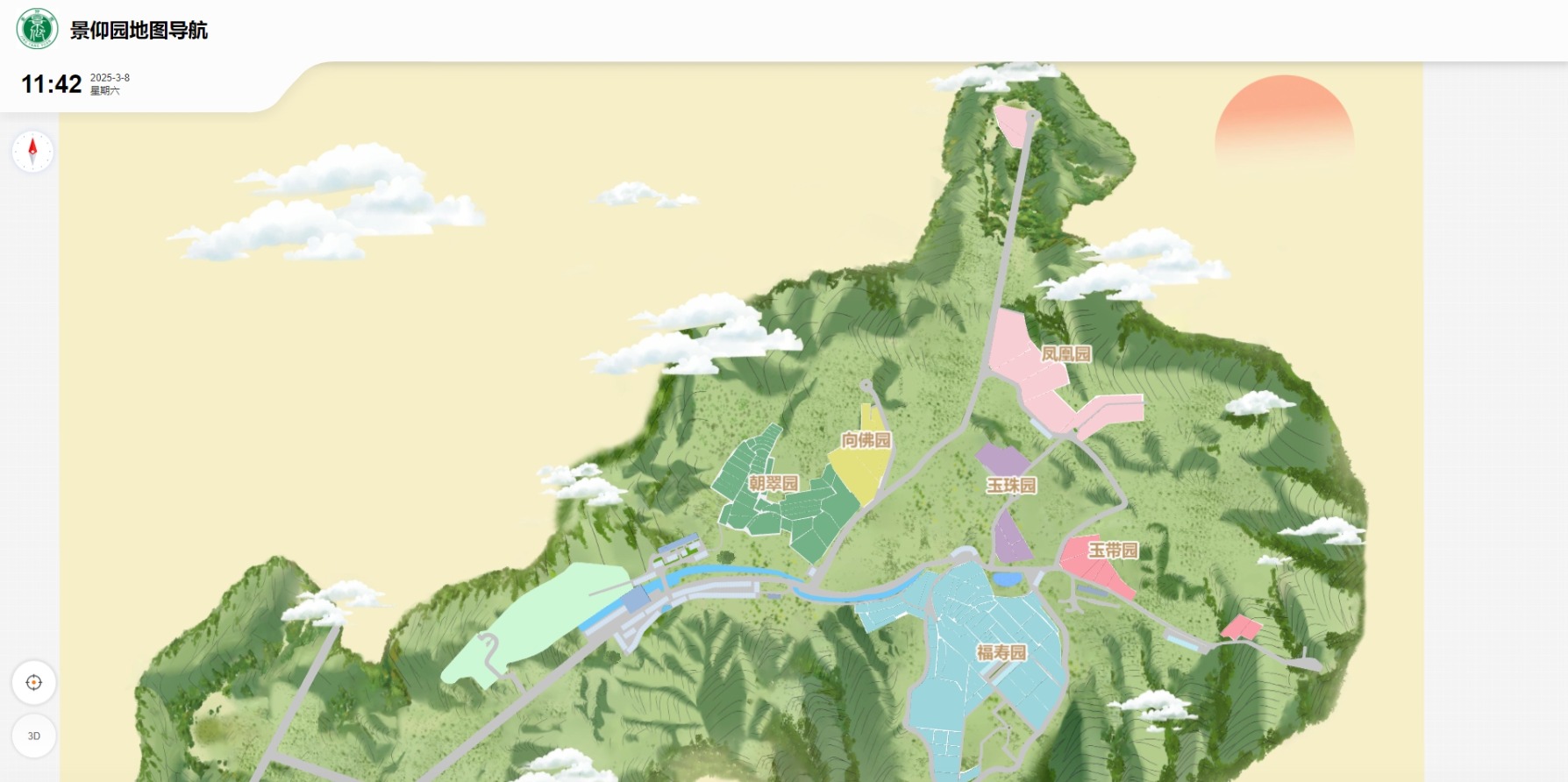
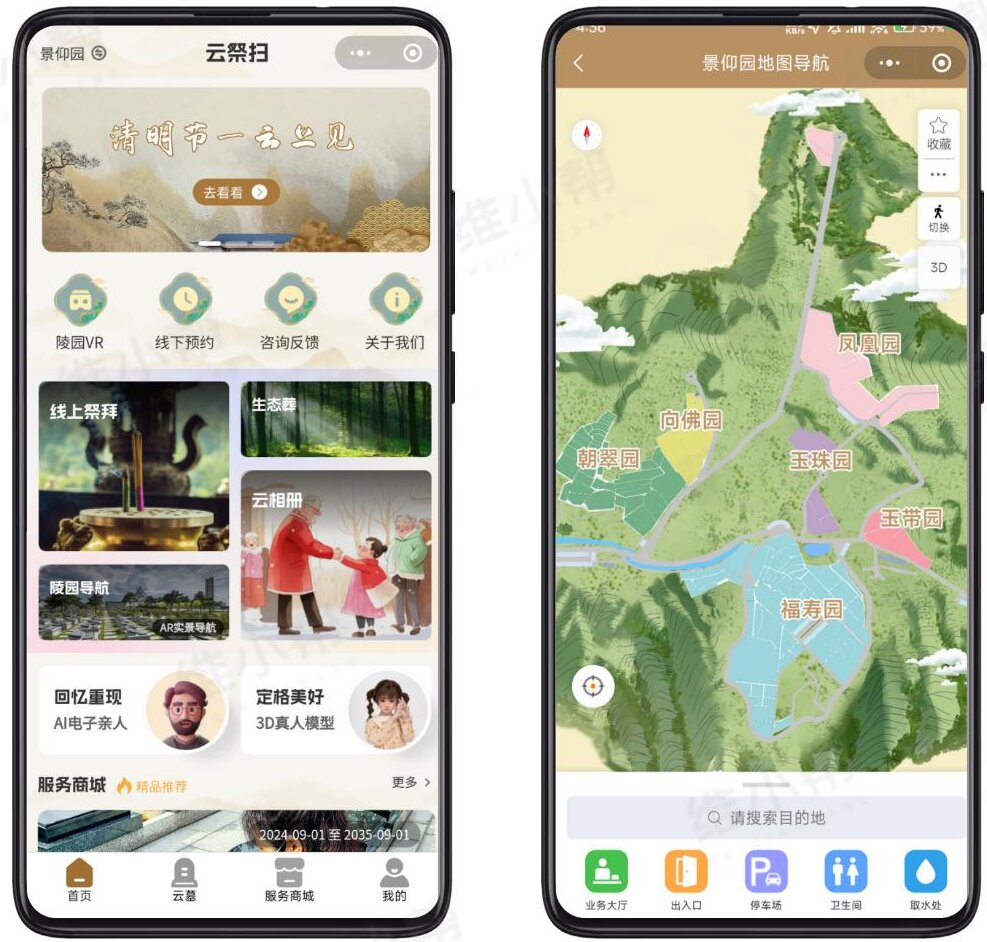
1. Hand-drawn Cemetery Map:
Combining traditional and modern design elements, a unique hand-drawn guide map of the cemetery is created, marking important memorial areas and tour routes to provide visitors with intuitive and artistic guidance.
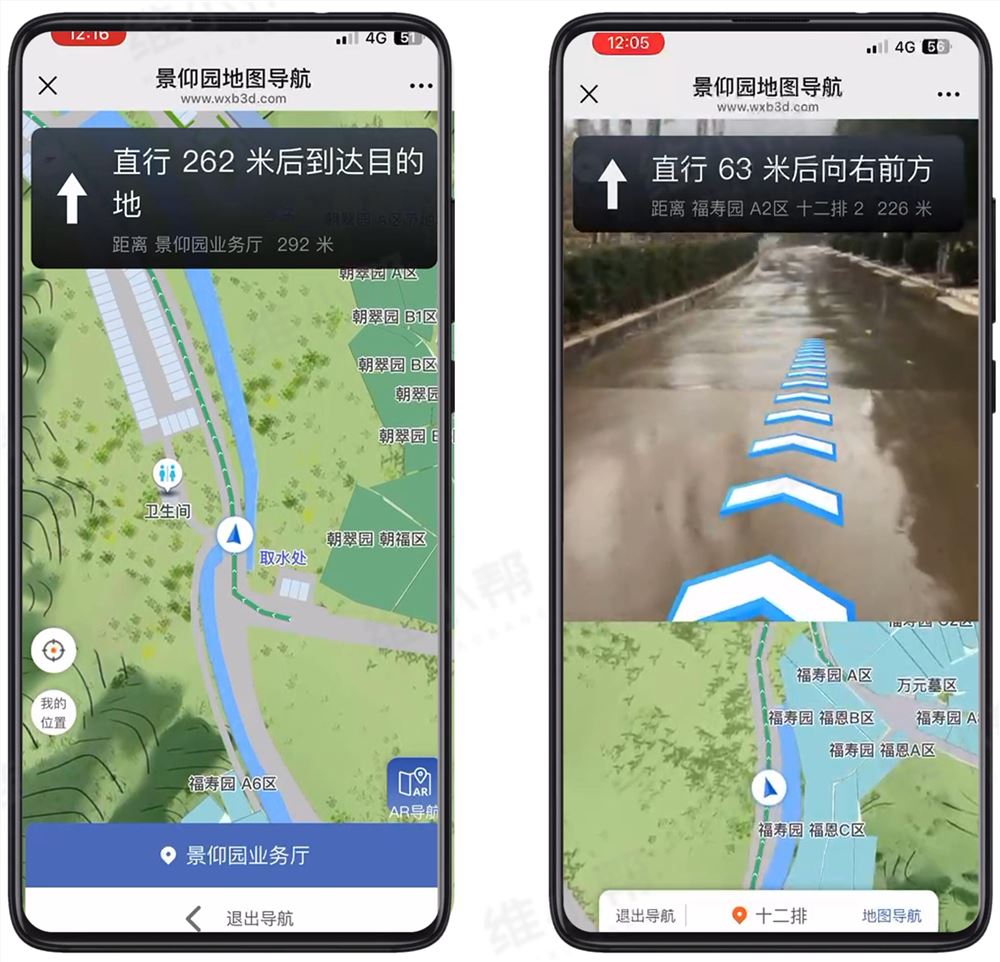
2. GPS Positioning and Navigation:
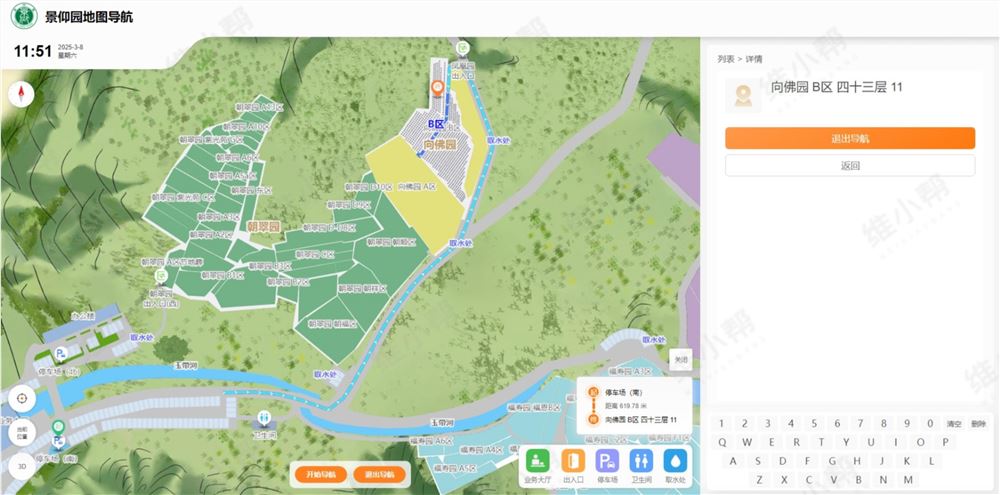
Introducing high-precision GPS positioning technology to achieve accurate positioning and convenient navigation for visitors. The system supports facility search, real-time location sharing, and multilingual attraction introductions. Especially for more than 20,000 graves, it provides precise navigation to ensure visitors can safely and conveniently find their destination.
3. AR Navigation:
Using augmented reality technology to integrate virtual navigation information with the real environment, providing visitors with an immersive navigation experience. Especially in complex environments, AR navigation can guide directions more intuitively.
4. Cemetery Management System Integration:
Seamless integration with the cemetery management system allows visitors to query detailed information about relatives stored in graves, specific locations, etc. One-stop service makes it easy for visitors to quickly obtain the required information and improves cemetery management.
5. Application Benefits
1. Improved Visitor Experience:
Technology empowers the traditional funeral industry. Through the smart guide system, visitors can easily find the target grave, learn about their relatives, and enjoy an immersive navigation experience, making the process of remembering loved ones smoother and warmer.
2. Improved Management Efficiency:
The seamless integration of the cemetery management system and the smart guide system enables real-time updates of grave information, timely facility maintenance, and attentive visitor services, greatly improving the management efficiency and operational level of the cemetery.
3. Integration of Technology and Warmth:
By integrating humanistic care through technology, visitors feel warmth and guidance in the solemn cemetery environment, achieving a perfect combination of technology and warmth, and setting a new benchmark for the traditional funeral industry.