

Qinghai Province stands on the Roof of the World, with the 'Three River Sources' nurturing Chinese civilization, the Qaidam Basin rich in minerals, and a unique plateau ecosystem. The Qinghai Provincial Natural Resources Museum, relying on geological endowments and diverse cultural integration, carries the evolutionary history of the Qinghai-Tibet Plateau, inscribes the ancient Qiang and Tubo civilizations, and the Silk Road imprint. This hall, blending nature and humanity, urgently needs digital activation of its cultural genes to become a highland of heritage.
I. Project Introduction
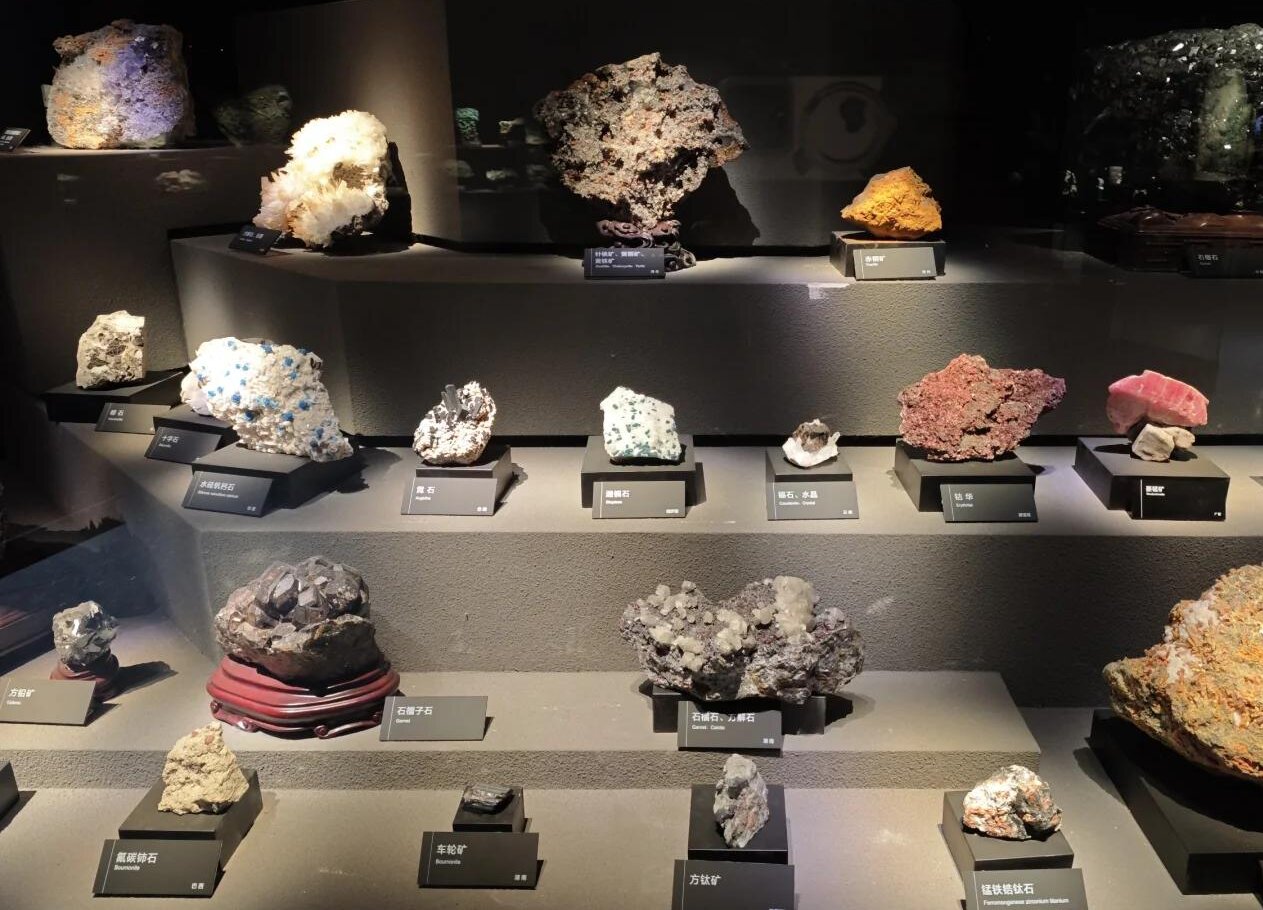
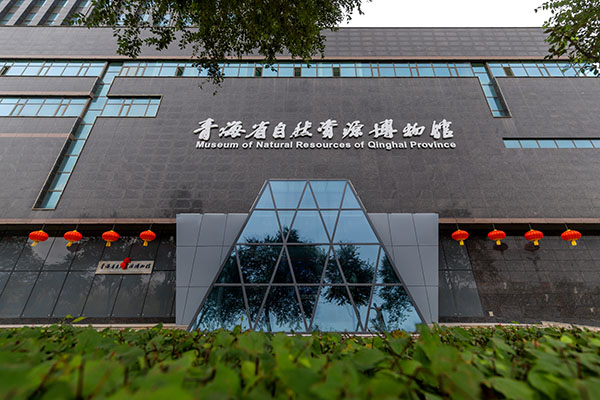
Qinghai Provincial Natural Resources Museum is a comprehensive museum showcasing Qinghai's abundant natural resources, especially geology, minerals, and biology. The museum houses a large number of precious natural resource specimens and cultural relics, with five exhibition halls displaying over 540 photos, animal and plant specimens, and rock and mineral fossil specimens 1046 items. It is an important window to understand Qinghai's natural resources and is a national key museum and a national second-class museum.
Weixiaobang uses advanced technologies such as 3D map engines and high-precision positioning algorithms to create a precise, content-rich, and user-friendly guide system, bringing visitors a brand new experience.
II. Project Pain Points
1. Difficult Layout: The museum has a complex layout and multi-level indoor structure, making it hard for visitors to quickly familiarize themselves and plan routes, resulting in low efficiency and wasted time.
2. Poor Interactive Experience: Interaction relies on traditional signboards and guides. With many types of exhibits, it's hard to quickly recommend exhibit locations and routes, making immersive navigation impossible.
3. Single Explanation Format: Exhibit explanations are mostly text or manual, not vivid, making it hard for visitors to deeply understand cultural connotations and natural resource value.
4. Lack of Interaction: Lacks interactive experiences, no special photo spots or check-in activities, weak visitor engagement, and little lasting impression or sharing willingness.
5. Inconvenient Information Access: Visitors lack convenient channels to get overall information about exhibits, history, features, and honors, making it hard to deeply understand the stories behind exhibits.
III. Solutions
1. Lightweight High-Precision Map:
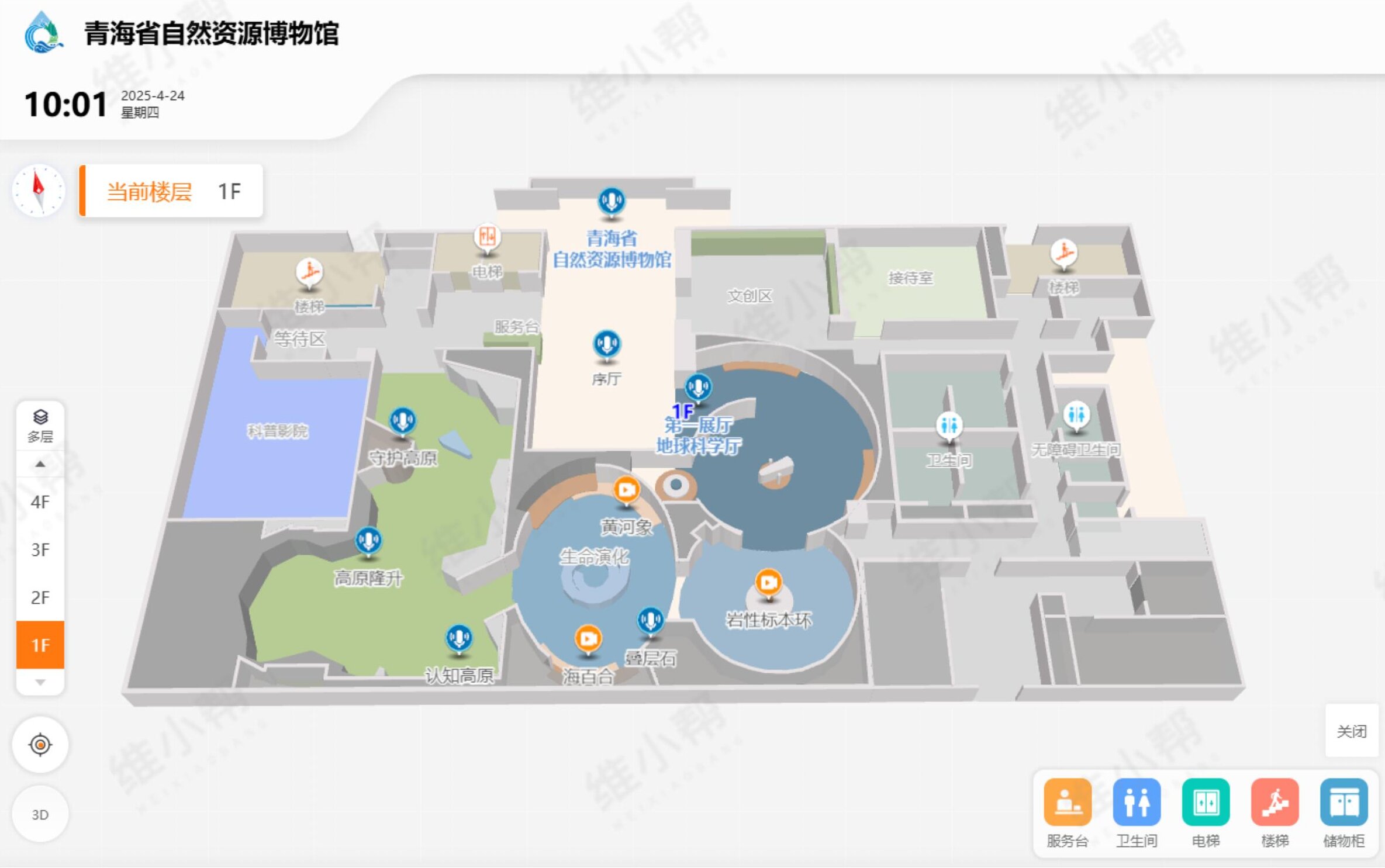
Supports seamless switching between indoor and outdoor 3D maps, presenting multiple buildings in the area in 3D. High-precision multi-level indoor maps allow easy switching between single and multiple floors, helping visitors quickly grasp the museum layout and plan routes.
2. Smart Indoor Navigation:
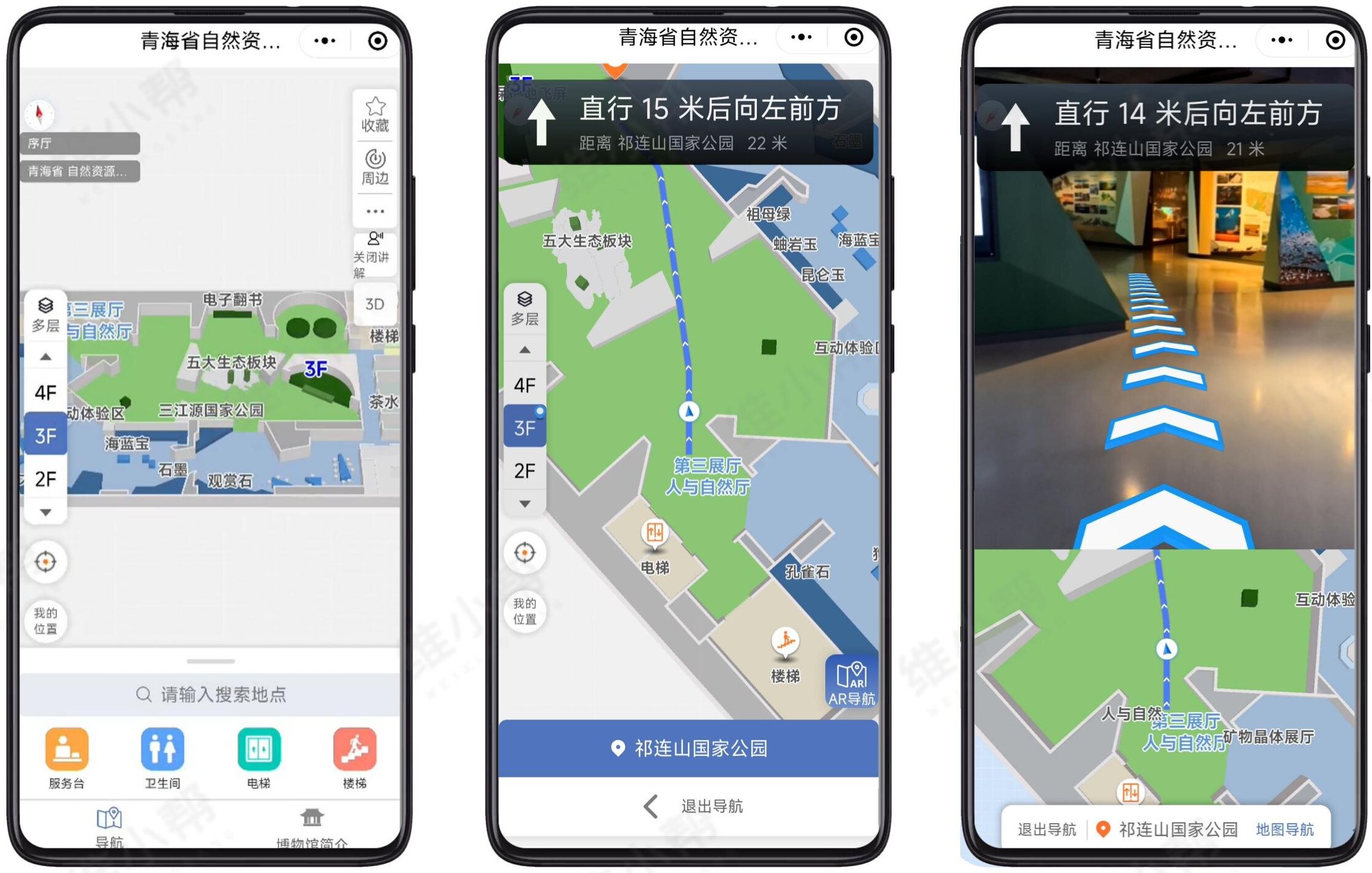
Offers multiple route preferences to meet different visitor needs. Navigation provides text and voice prompts, direction correction, and automatic re-routing, and supports AR real-scene navigation, acting as a caring guide to help visitors easily find their destinations.
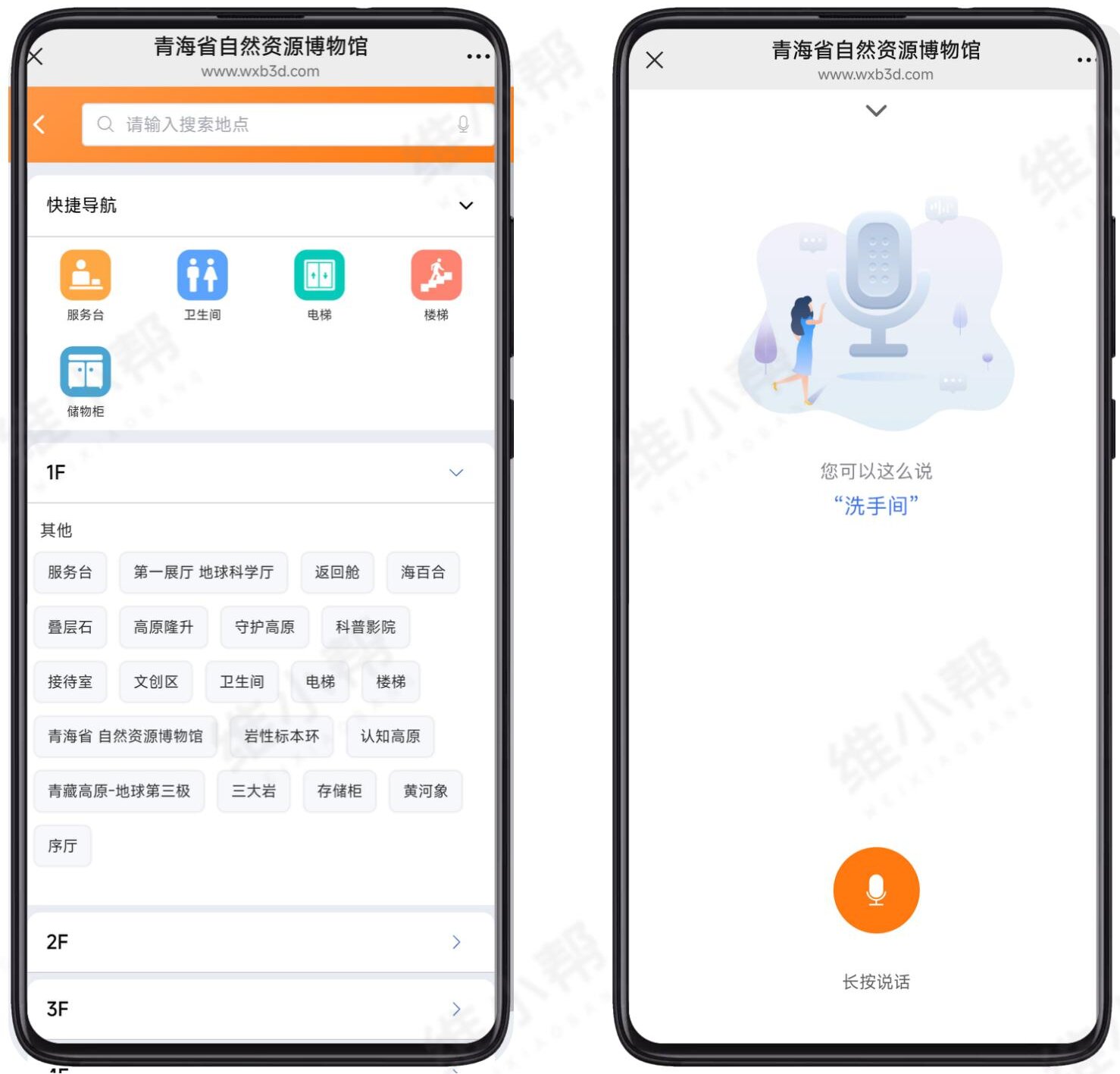
3. Smart Infrastructure Interaction:
Supports voice input and semantic recognition, accurately recommending exhibit locations and route preferences. Combined with seamless indoor-outdoor 3D map switching, it realizes 'what you say is what you see' immersive navigation.
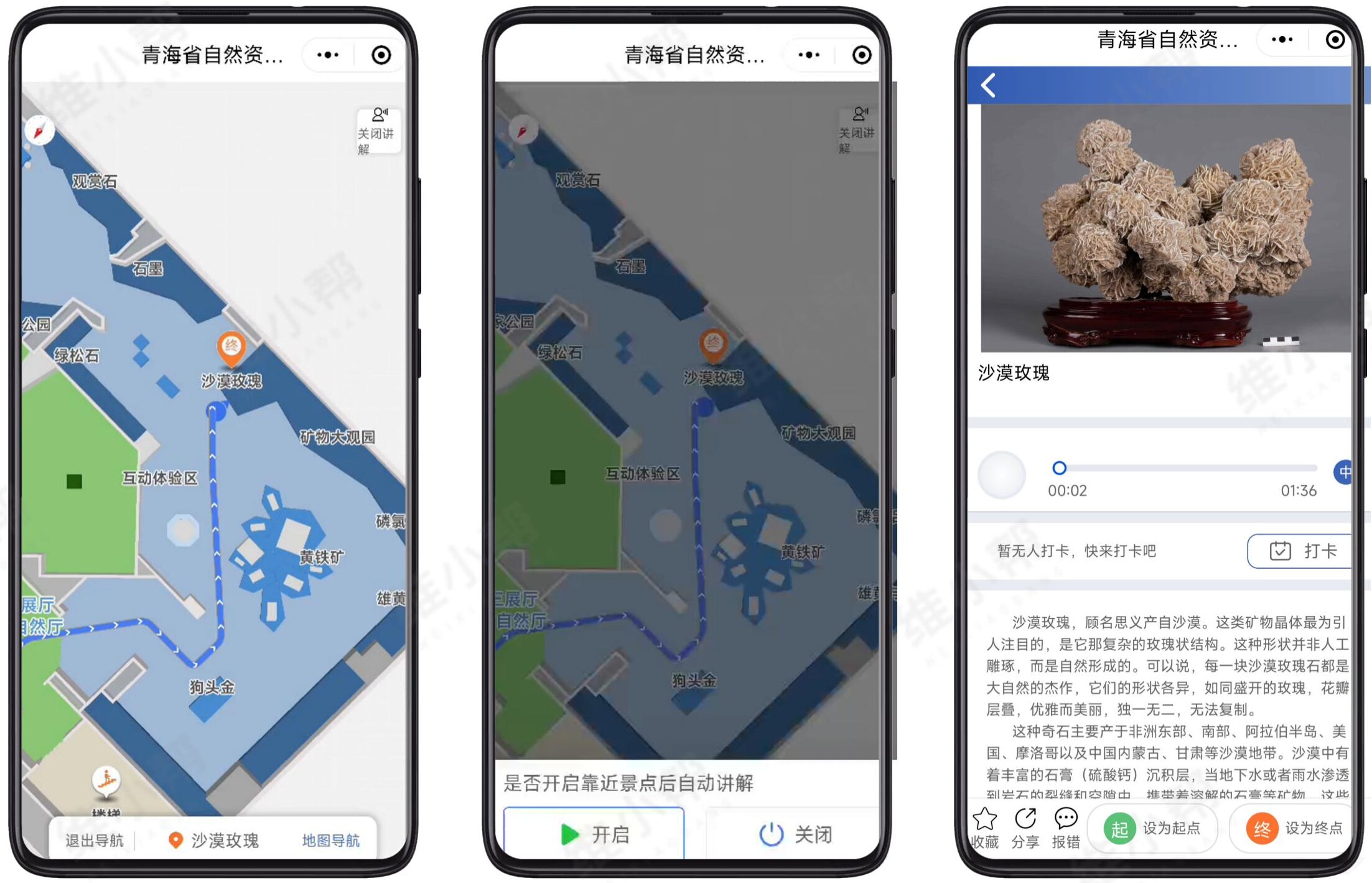
4. Exhibit Explanation:
While visiting, the system automatically triggers immersive voice explanations based on location, with vivid content. It also pops up image and video materials, intuitively presenting the cultural connotations and natural resource value of exhibits, effectively spreading museum culture.
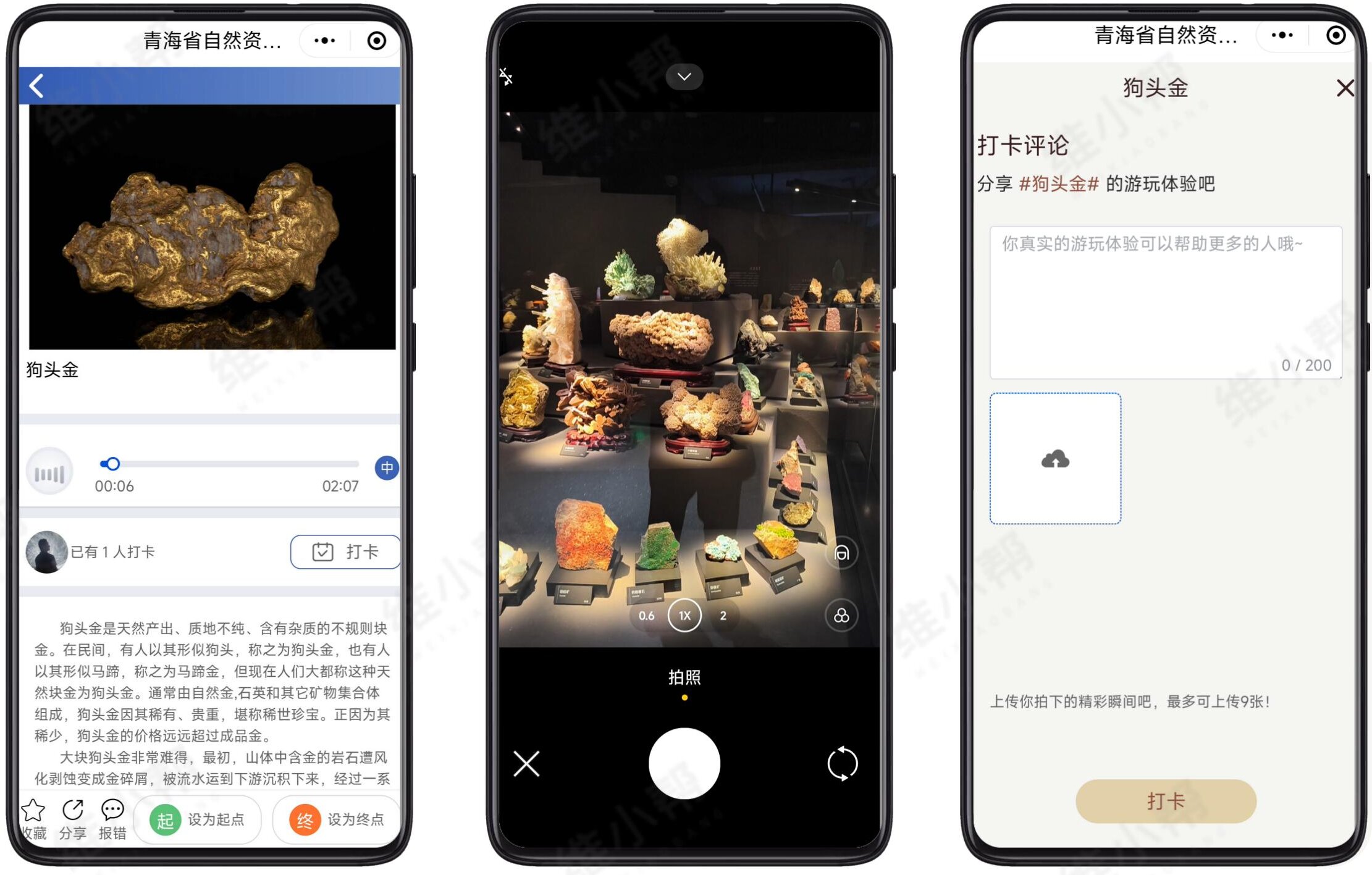
5. Exhibit Photo Check-in:
Special photo spots are set up in the museum, combined with exhibits or hall themes. The collection page has check-in activities, and completing tasks earns commemorative titles. There is also a photo story sharing section to enhance visitor interaction and communication.
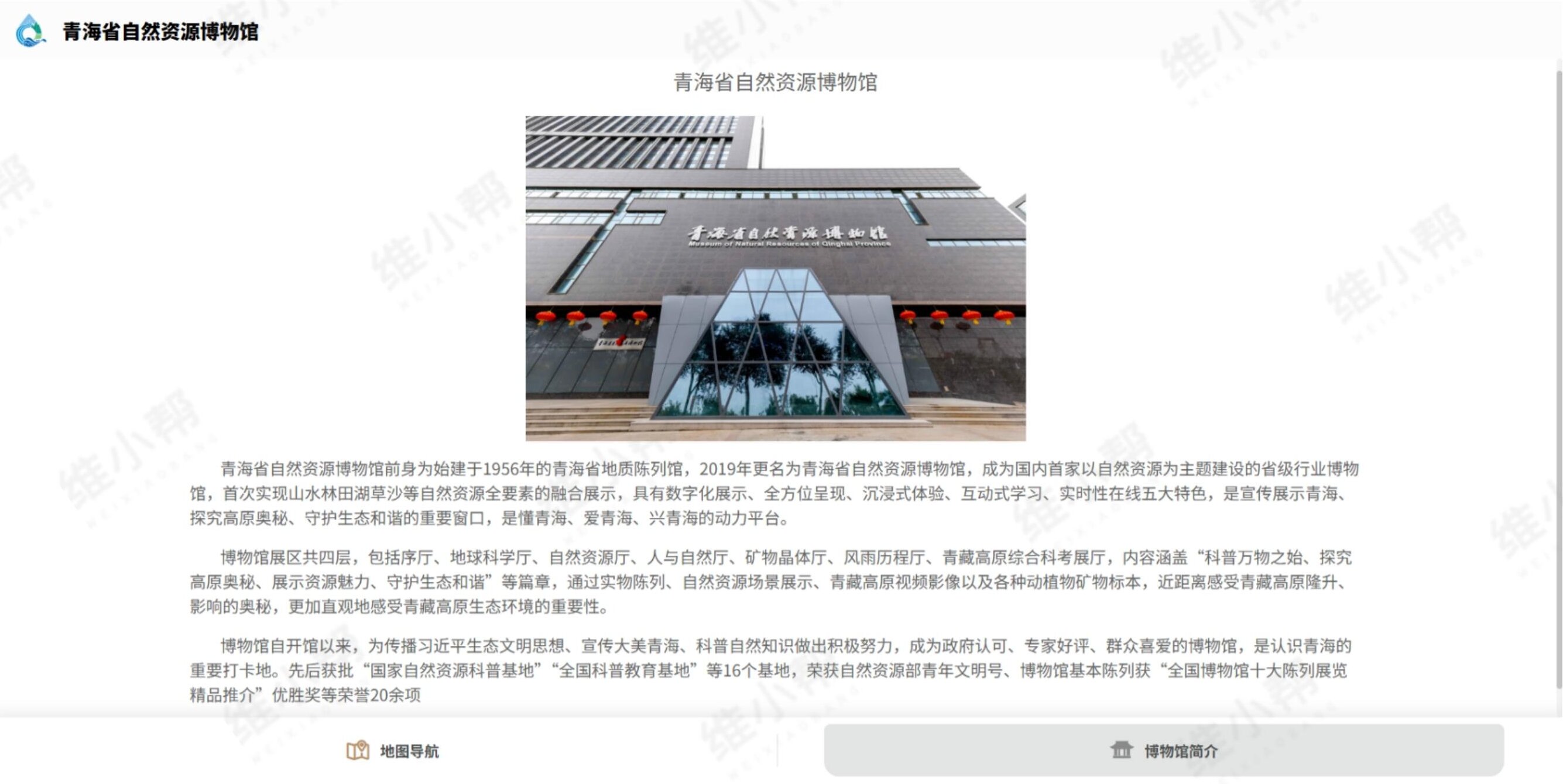
6. Museum Introduction:
The guide system has a dedicated section displaying basic information such as name and location with images and text. A timeline reviews the development process, introduces highlights, and showcases honors, giving visitors a comprehensive understanding before visiting.
IV. Implementation Benefits
In the era of booming digital culture and tourism, the museum guide system integrates various information and digital technologies to provide visitors with more convenient, efficient, and comprehensive services. It helps visitors quickly understand museum and exhibit information, greatly shortens service acquisition time, and effectively improves service quality.
By assisting in the construction of smart museum informatization projects, a visitor-oriented display application project has been established, creating a new smart museum model characterized by comprehensive perception, interconnection, and intelligent integration. Visitors only need a mobile phone to tour the museum, as if traveling through time and space, immersively experiencing the unique charm of Qinghai's natural resources.